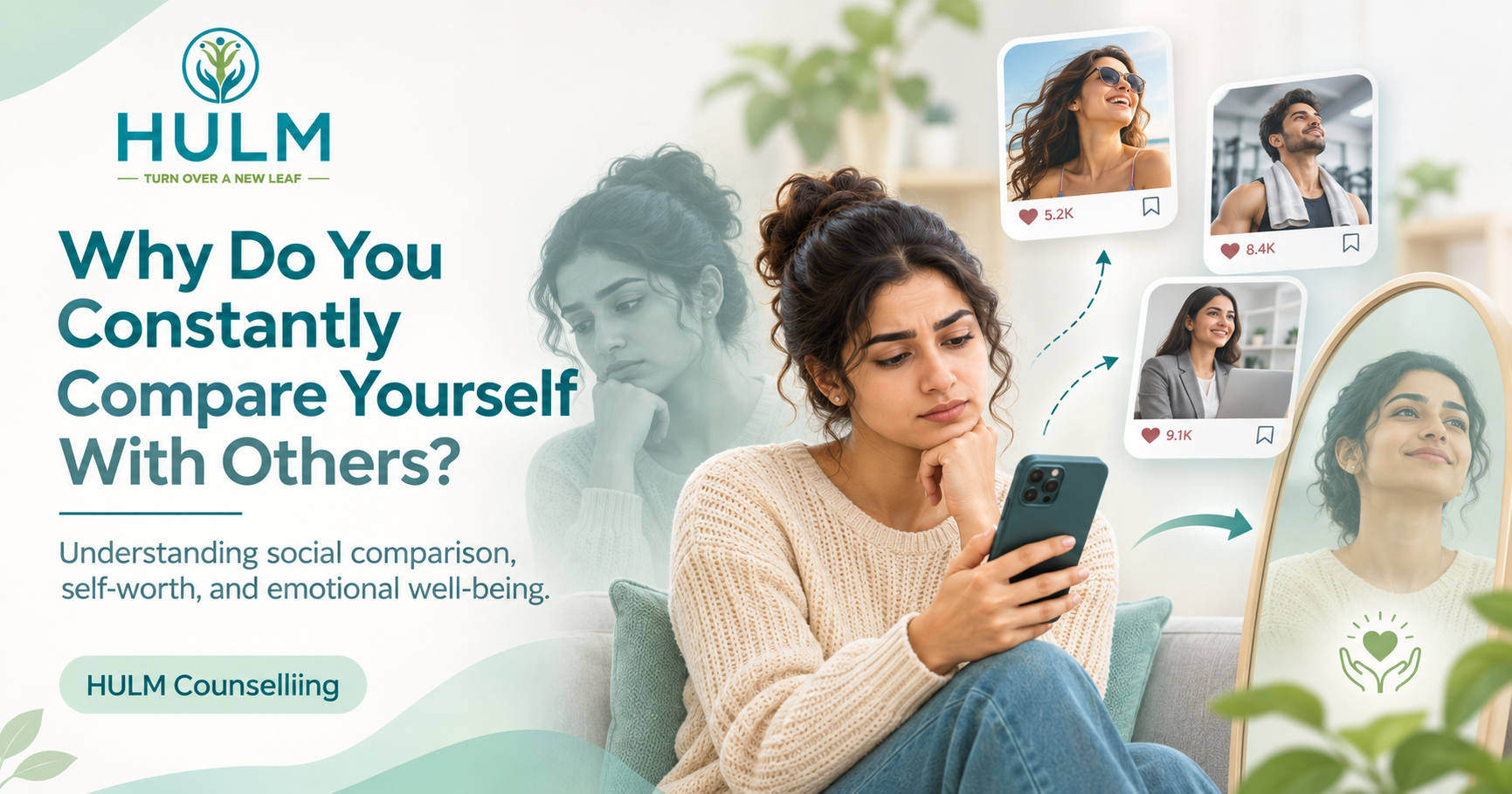
Why Do You Constantly Compare Yourself With Others?
Comparing yourself with others is a common human behaviour, but constantly measuring your achievements, appearance, lifestyle, or progress against someone else's can affect your confidence and emotional well-being. This habit, known as social comparison, can create feelings of inadequacy, self-doubt, dissatisfaction, and pressure to meet unrealistic expectations. Understanding why you compare yourself with others and learning to focus on your own progress can help you develop a healthier relationship with yourself.
Why Do People Constantly Compare Themselves With Others?
People often compare themselves to understand where they stand, evaluate their progress, or seek reassurance about their abilities. However, these comparisons can become unhealthy when personal worth starts depending on how someone measures up against others.
Several factors can contribute to this behaviour:
- Low self-esteem: Feeling uncertain about your abilities may make you seek validation through comparisons.
- Fear of falling behind: Seeing others achieve milestones can create pressure to reach similar goals.
- Unrealistic expectations: Comparing your everyday experiences with someone else's achievements can create dissatisfaction.
- Need for external validation: Depending on others' approval can make your confidence vulnerable to outside opinions.
- Social media influence: Frequently viewing carefully selected online content can distort your understanding of everyday life.
Recognising these influences is the first step towards changing the habit.
How Does Constant Comparison Affect Your Mental Well-Being?
Comparisons can sometimes motivate improvement, but repeated negative comparisons may affect how you see yourself and your achievements.
1. It Can Lower Self-Confidence
When you constantly focus on what others have achieved, you may overlook your own abilities and progress. Even meaningful accomplishments can start feeling insignificant.
Over time, this can weaken self-confidence and make you question your decisions, talents, and personal potential.
2. It Creates Unrealistic Expectations
Everyone has different circumstances, resources, opportunities, and responsibilities. Comparing your personal journey with someone else's can create expectations that may not reflect your reality.
For example, seeing someone achieve career success at a younger age does not mean you are unsuccessful or falling behind.
3. It Encourages Negative Self-Talk
Repeated comparisons may lead to thoughts such as, "I am not good enough" or "Everyone is doing better than me."
This type of negative self-talk can influence your motivation, emotional responses, and willingness to try new things.
4. It Can Increase Emotional Stress
Constantly evaluating yourself against others may create pressure, dissatisfaction, frustration, or feelings of inadequacy. These experiences can gradually affect emotional well-being and make it difficult to appreciate everyday achievements.
How Social Media Can Increase Comparison
Social platforms make it easier to observe other people's lifestyles, relationships, careers, holidays, and personal milestones. However, online content often represents selected moments rather than a complete picture of someone's life.
Frequent social media comparison may encourage unrealistic expectations about appearance, success, happiness, and relationships.
Instead of assuming that everyone else has a perfect life, remember that online posts rarely show the challenges, setbacks, and uncertainties people experience privately.
Taking breaks from comparison-triggering content and being more intentional about what you follow can help create a healthier digital environment.
7 Practical Ways to Stop Comparing Yourself With Others
1. Recognise Your Comparison Triggers
Notice when comparisons happen most frequently. Is it after browsing social media, speaking with certain people, or hearing about someone's achievements? Self-awareness can help you identify these patterns and respond more thoughtfully.
2. Focus on Your Own Progress
Measure growth against your previous experiences rather than someone else's milestones. Small improvements in your skills, habits, and personal goals deserve recognition.
3. Practise Gratitude
Make time to acknowledge positive aspects of your life. Maintaining a gratitude journal can help shift attention away from what you believe you lack.
4. Limit Unhelpful Social Media Use
Unfollow accounts that consistently make you feel inadequate. Choose content that encourages learning, creativity, and realistic perspectives.
5. Challenge Negative Thoughts
When you catch yourself thinking that someone is better or more successful, question whether the comparison is fair. Replace unrealistic judgements with balanced thoughts.
6. Set Personal Goals
Create goals based on your interests, abilities, and priorities. Working towards meaningful objectives can strengthen your sense of direction and personal growth.
7. Celebrate Your Achievements
Do not wait for major milestones to appreciate yourself. Recognise everyday efforts, improvements, and small victories. Developing a stronger sense of self-worth starts with valuing yourself beyond external achievements.
When Should You Consider Professional Support?
Sometimes, constant comparison becomes difficult to manage independently. Consider seeking guidance when self-doubt, dissatisfaction, negative thinking, or insecurity begins affecting your relationships, work, confidence, or daily activities.
A qualified mental health professional can help you understand underlying thought patterns, explore emotional triggers, and develop healthier ways of evaluating yourself.
People looking for a psychologist in Bangalore can consider professional counselling when persistent comparison affects their confidence or emotional well-being.
How HULM Counselling Can Support Personal Growth
HULM Counselling provides counselling and psychotherapy support for individuals navigating emotional and personal challenges. A supportive professional environment can help individuals explore self-doubt, understand recurring thought patterns, and develop healthier approaches to self-acceptance.
The goal is not to become better than someone else, but to develop a more balanced understanding of your own abilities, needs, and personal journey.
Frequently Asked Questions
1. Why do I compare myself with others so much?
Frequent comparisons may be influenced by low self-esteem, insecurity, fear of missing out, social expectations, or a need for external validation. Identifying the situations that trigger these thoughts can help you understand the habit.
2. How do I stop comparing my life with others?
Focus on your personal goals, reduce exposure to comparison-triggering content, practise gratitude, and recognise your progress. Remember that everyone's circumstances and timelines are different.
3. Is comparing yourself to others unhealthy?
Not always. Comparisons can sometimes provide motivation or help you learn. However, they may become unhealthy when they repeatedly create insecurity, dissatisfaction, jealousy, or negative thoughts about yourself.
4. How does social media affect self-esteem?
Frequent exposure to idealised images and carefully selected achievements may create unrealistic expectations. Comparing your everyday experiences with these online portrayals can negatively influence how you evaluate yourself.
5. Can counselling help with comparison and insecurity?
Yes. Counselling can help you explore underlying beliefs, understand negative thinking patterns, develop self-acceptance, and build healthier approaches to confidence and personal growth.
Conclusion
Constantly comparing yourself with others can make it difficult to appreciate your own abilities, achievements, and experiences. Learning to recognise comparison triggers, challenge negative thoughts, and focus on personal goals can help you develop a healthier sense of self-worth. Your progress does not need to match anyone else's timeline. What matters is building a life that reflects your own values, priorities, and aspirations.